my bipolar journey, pt. 3
I never expected this to become a series

Back in April, shortly before visiting a psychiatrist for the first time, I decided to write up my experiences. I had decided to try and describe my symptoms and journey for friends, relatives and colleagues. Especially for colleagues, some of whom had started talking about my recent behaviour behind my back. I don't blame them for this, because I was certainly acting differently to what they had wrongly assumed was my nature.
If you have any interest in catching up on parts 1 and 2, you can find both below. I'll wait. But today is more about what others have taught me. In particular, I look in more detail at some books that helped me this autumn. If the first two parts of this series were mainly about me, today is more about other people.
 PAUL DETTMANN
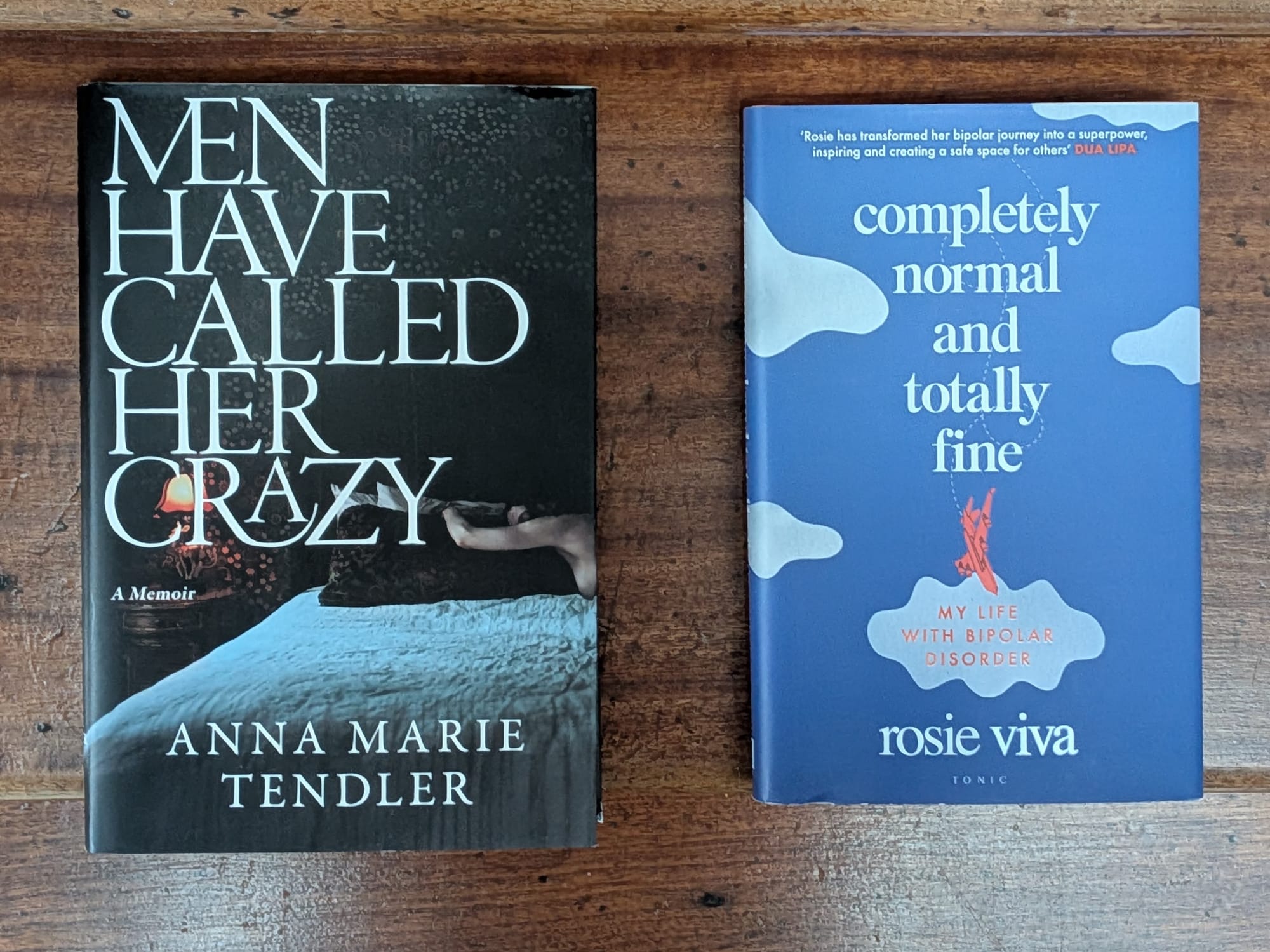
Rosie Viva has one of the best names for someone with type 1 bipolar, the more severe kind. Over the years I have found myself moaning that I 'only' have cyclothymia, a form of bipolar so mild that I have nearly always been able to mask the more extreme symptoms from everyone, including my parents and other relatives. I wanted to read Rosie's book after seeing a short film she made for Bipolar UK which absolutely nailed my symptoms in two minutes. The split-screen is the perfect technique to show the contradictions in the condition.
Cyclothymia is technically in a different diagnostic category in the ICD-10 way of thinking. However, to say you have a mild form of such a serious condition is still a big thing. It still radically changes the course of your life, and how you manage your emotions every minute of every day. And in ICD-11, cyclothymia moves within the bipolar category for the first time. Regular readers will know of the scepticism I harbor about the way the more famous DSM was created and then gradually corrupted.
I decided to listen to the audiobook version of Rosie's book, Completely Normal and Totally Fine because she reads it herself. One of the reasons I love writing is that to an extent you can fire and forget. But reading your own memoir about such deep crises and personal feelings takes real guts. I knew I would get more out of the experience if Rosie was telling her story with her own voice and I was not wrong. I also noted that she and I are on the same medicine, quetiapine, something which totally changed my 2025 and will hopefully lead to a calmer 2026.
Other reasons I was drawn to Rosie's book include the title, which is similar to my own well-worn phrase: I'm PERFECTLY fine! Also, Rosie is Gen Z, which might help me know what to look for in case my daughter starts to travel along the same path when she hits twenty or has a crisis at university. I found that living independently for the first time at university did lead to undiagnosed depression, even though I was not truly cyclothymic until my first major work project in London at the age of 22.
Rosie says that her book is not just for people who think they are bipolar. It would make a good gift for anyone because the statistics indicate that someone in your life is mentally unwell right now, even if you have no idea. And there is a pretty decent chance that one of them will have some form of bipolar disorder. I loved the book, and it led me to watch her short but powerful Channel 4 documentary. It is a hard but important watch. In that documentary, I spotted the next book I wanted to read.
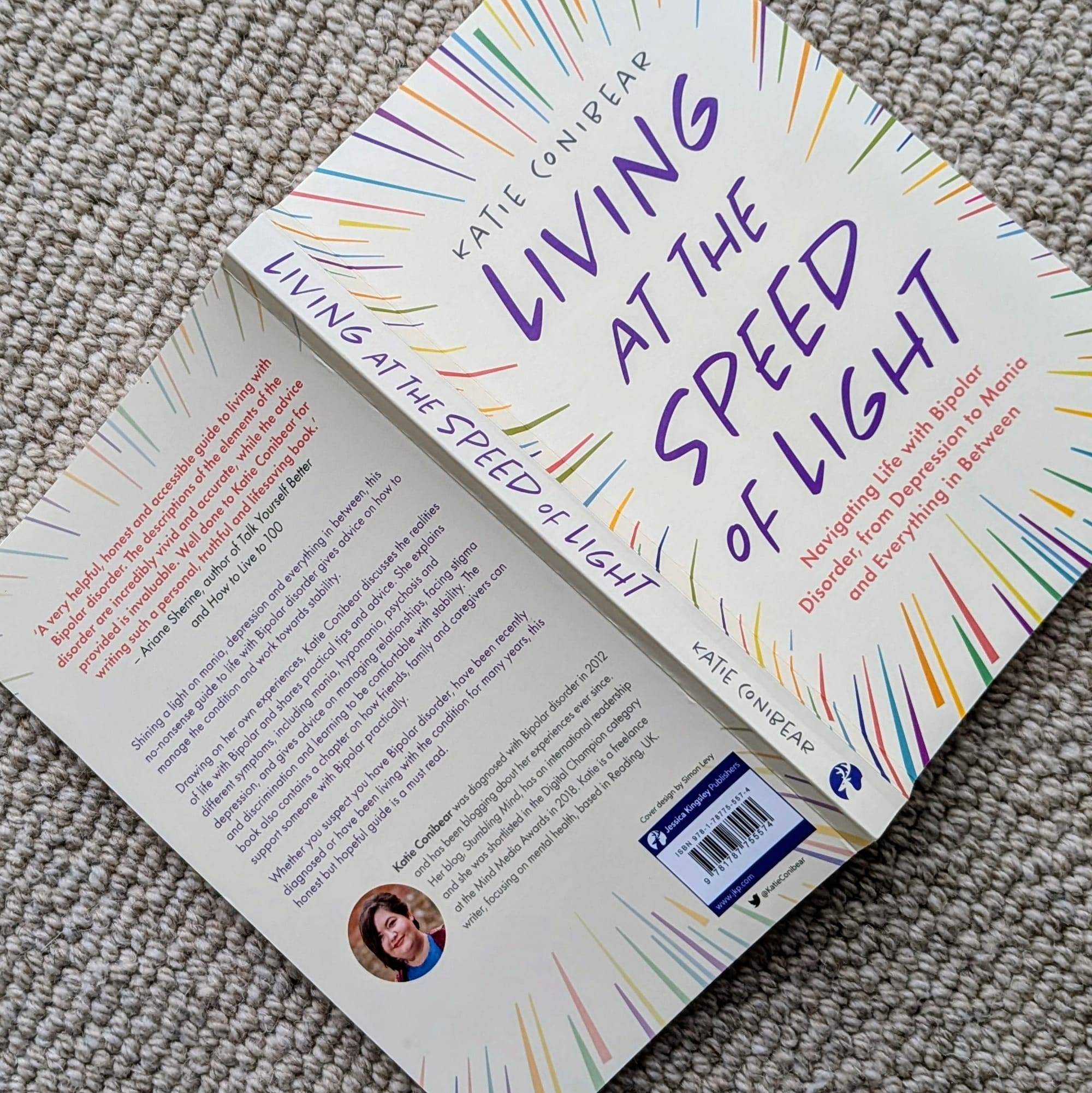
Living at the Speed of Light by Kai Conibear is a different book altogether. It is written more as a self-help book which breaks down the main components or aspects of bipolar in a very useful and logical way. It is useful whether you have bipolar, or suspect that you do, or you think someone else in your life might have it.
Kai Conibear writes very well about mania and type 1 bipolar. He shares some truly deep and personal anecdotes as a way of helping you understand the condition and identify whether you might have it. But it is more balanced and therefore more detached from the intense pain of bipolar than Rosie's book. In that sense it is a more gentle read if you are in the grip of depression or hypomania at the moment. Although that might also be because I read the paperback as there is no audio version that I could find.
The final book on my autumn reading list was suggested to me in a Lola Kirke Substack Live. Lola's friend, the artist Anna Marie Tendler, provides an American perspective on being a twentysomething woman with mental illness in her book Men Have Called Her Crazy, which has a provocative title if you're a man. Again I opted for the audiobook narrated by AMT herself.
Anna Marie is not bipolar but she did have a spell in hospital, and I really wanted to know more about that experience. I think the mere phrase 'mental hospital' (although better than labels like nut house) puts fear into any conversation and I was relieved to find that the experience need not be all Cuckoo's Nest. Her book is also engaging and deeply personal.
AMT also has a creative career, as do Kai and Rosie, and as you might have guessed by now. One of the (very few) upsides of bipolar especially is the spells of immense creativity that often come with it. Anna Marie has been a make-up artist and beautician and is a very gifted prose writer. She reads her own words in a clear voice and tackles the hardest passages head on. She's also very funny.
Two of these authors are active on Substack (both AMT and Kai), so you can continue reading them long after the books go back on the shelf. However the best thing you can do after reading is give them away. These are more like public service broadcasts than normal books.
What all of these books have in common is a comparatively happy ending. All three authors survived in the best sense. They not only muddled through, but they got a diagnosis and they got the help they needed, even if it took too long. In all cases they had supportive family members, partners, friends... and I reluctantly came to realise that this was not a condition that I could fully address on my own.
Don't try to choose between these books. It's Christmas. Put them all on your list. And follow them all on Substack or Instagram!