ROBOTA
Oxford's new Schwarzman theatre is the scene for this thought-provoking sci-fi drama.

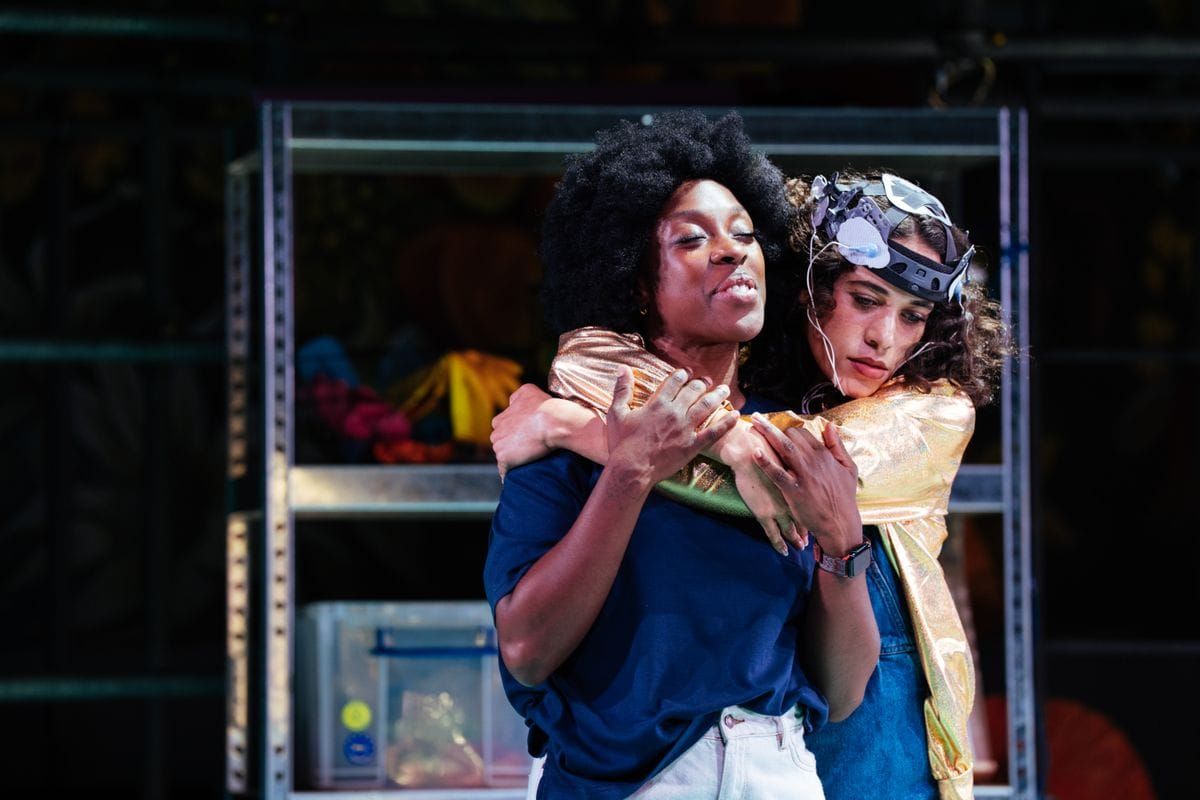
Warning: Two of the parts in ROBOTA are played by humanoid robots, a world first. We sat in the second row and can vouch for their realism. Even the human actors on stage said they looked real. There's just something a little funny about how their skin feels, they say. If you stare hard you can see a little twitching in the eye and fingers that shake in unusual ways.
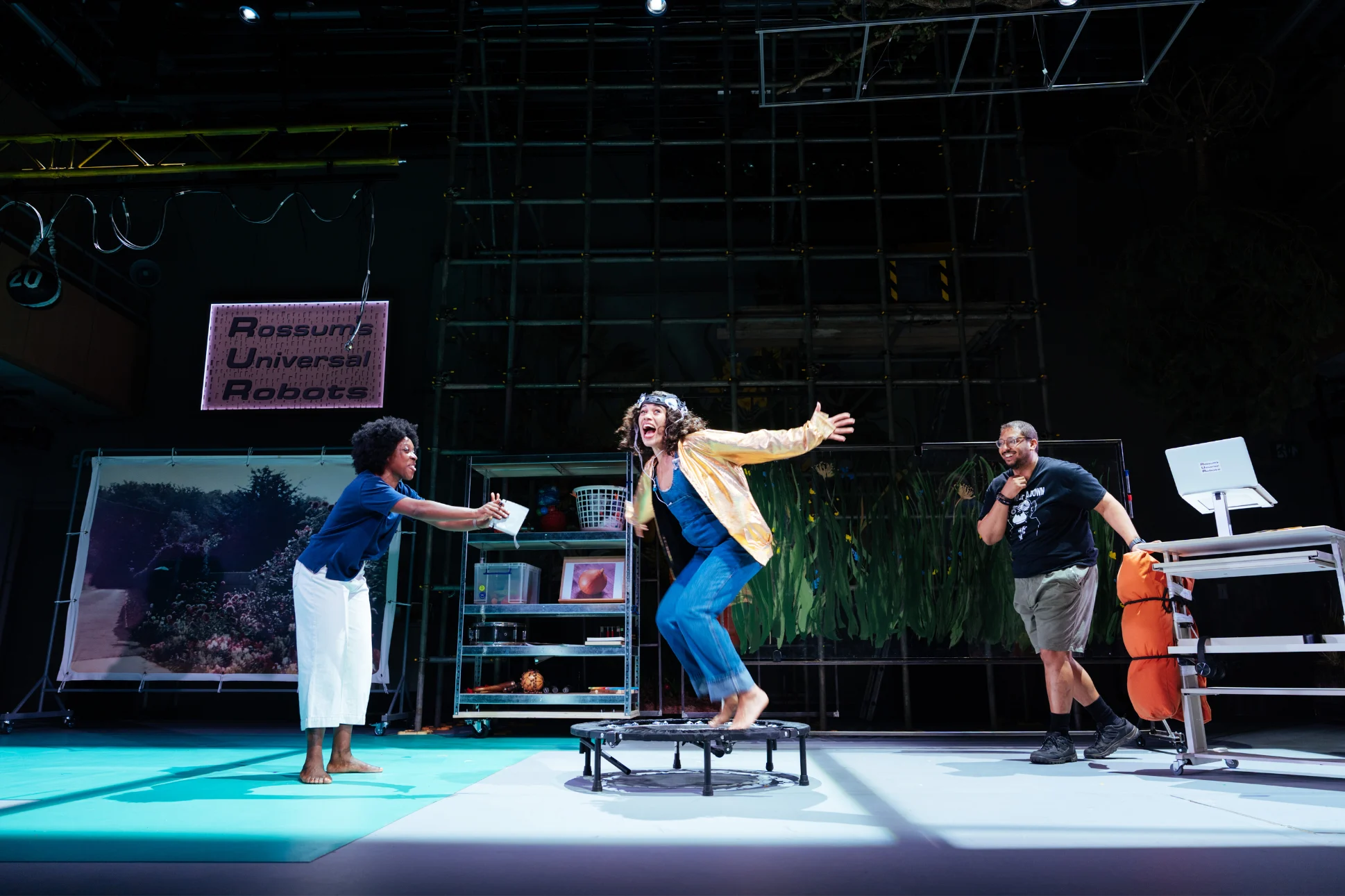
"In 1920, playwright Karel Čapek imagined a world of AI and rebellion, inspiring and influencing a century of sci-fi cinema. 100 years later, Headlong reawakens his visionary play Rossum’s Universal Robots (R.U.R.) as ROBOTA – high-voltage theatre for the age of artificial intelligence."
The audience of ROBOTA are involved in a form of Turing Test, devised by Alan Turing around the same time AI was invented as a concept, in the 1950s. If a typical human cannot tell whether something is robot or human, does it cease to be robot? Does it even matter, if you cannot tell? And if you cannot tell, do the machines deserve human rights?
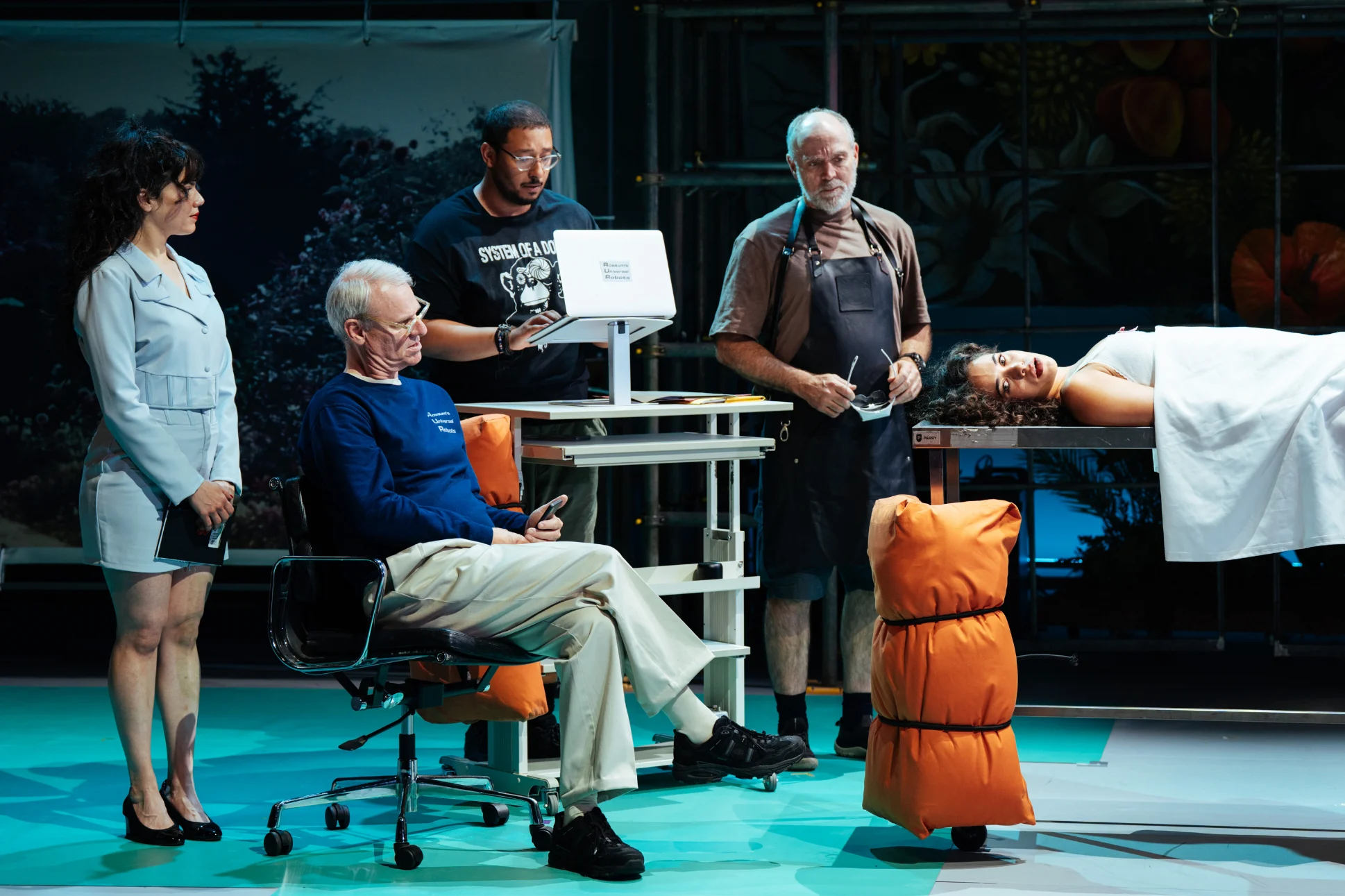
One of the things that drew me to AI in the 1990s was this philosophical side of it, the science fiction element. If you're listening carefully there's a reference to 2001: A Space Odyssey thrown in. It's notable that the tech bros in the play are all men and the robots are (virtually) all women. The musical Avenue Q noted that the internet was basically invented as a way to distribute porn. You don't need me to tell you what the men of RUR tried as soon as the first robot was delivered. Apparently some unanticipated repairs were required.
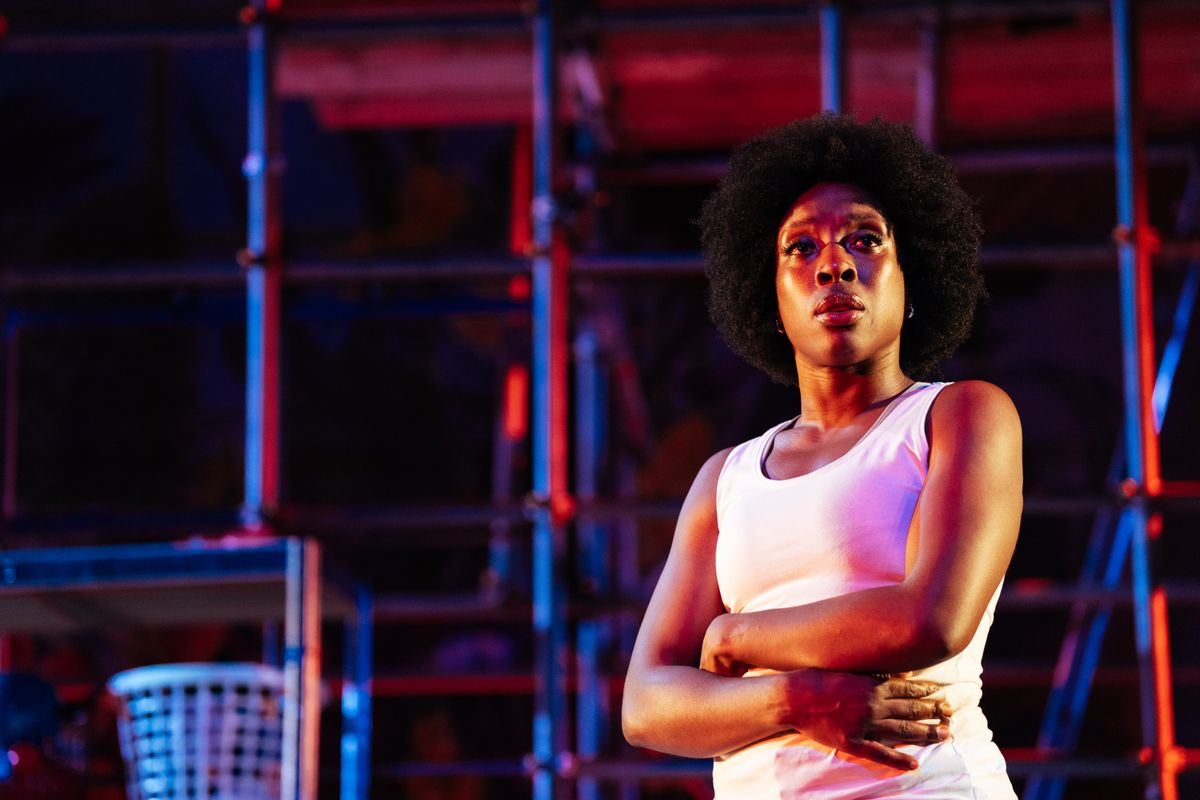
I'll dodge all the spoilers because there are truly surprising twists that won't hit the same if you're forewarned. Be reassured that this is a physical, arresting play. Even when not acting, the actors are pushing the many props around in front of you or clambering up on platforms twenty feet above the stage.
The original RUR play knew about Adam Smith's Wealth of Nations and Malthusian theory, named after an academic paper which noted that populations will always grow faster than their ability to feed themselves. That play also gave us the word robot, which it turns out is from the Czech for servitude, which is robota. RUR was set eighty years ahead of its time, in the year 2000, and we haven't made anything like the progress needed to pull off its ideas even now.
Realistically the future presented in ROBOTA is another century away. Or more. There's people who think it's fundamentally impossible to build human consciousness at all. Others think quantum computing will unlock that important step. But we already know that quantum isn't how actual brains work, it's just another form of simulation.
No scientist will give you a quote for when an actual biological brain might be grown in a lab. It could be a thousand years away. We have more pressing concerns, such as this intolerable heat. Oxford was quiet yesterday and almost unbearably hot. The Schwarzman centre and its venues, completed only recently, are a brilliant addition to the Radcliffe Observatory quarter near the Ashmolean.
We might be a little way off humanistic robots (cue embarrassing memes of recent failures at running events) but in the services industry, which has powered our economy for around 50 years, this is a heated debate. If your job consists only of writing emails and creating spreadsheets or slideshows, what does it mean for you when all that can be automated?
Some people would argue that true creativity can never be automated, me included. Even the senior tech bro in our play refused to let robots do the cooking. He won't even use a bread maker. Some things are fun and interesting and unique because they take a long time and are difficult to do. There was a short debate about why champagne is used by humans to celebrate special occasions. In the final analysis, if you could piss champagne, would it lose some of its allure?
There's a fun joke involving JavaScript and Python that you might need to be in IT to really get, and that's ok. The play does a great job of describing mind bogglingly complex tech ideas in accessible ways.
We had a fabulous afternoon in a brand new venue watching a fresh new play. They took all the best bits of RUR and kept its vibe but made the debate even more relevant for today's issues and challenges. You have another week to catch it. The theatre was wonderfully intimate. We felt like we were on the stage itself at times. Once or twice I felt close to genuine peril when the bangs and flashes started. Every element of this show works so well from the pyro to the one liners. Just go! Today!
If you're interested, I'm writing this on a bench in Regent's Park. I had been let down (stood up) by a human, which meant I could write this a day sooner than planned. I read that the King had been here yesterday, while I was in Oxford. He had come to look at the penguins, the same creatures which fascinated bass guitarist John McVie, who made them one of the many logos of Fleetwood Mac. The park was also important in cult movie Withnail and I.
It was raining that day, a total contrast to this morning. All this got me thinking. AI cannot even make a convincing robot penguin, never mind a human. But unless we change our approach, it won't be the penguins living in the zoo in a hundred years, it will be us. If we want to fix the climate, it might not be a great time to invent a technology that uses even more power and water than we were already guzzling.
Although the script and special effects, including the staging, were a big part of the success of ROBOTA, the cast were all magnificent. In particular the human Helen, Ronkẹ Adékọluẹ́jọ́, who has starred in Alex Rider and Doctor Who, plus theatre roles including several at the National Theatre.
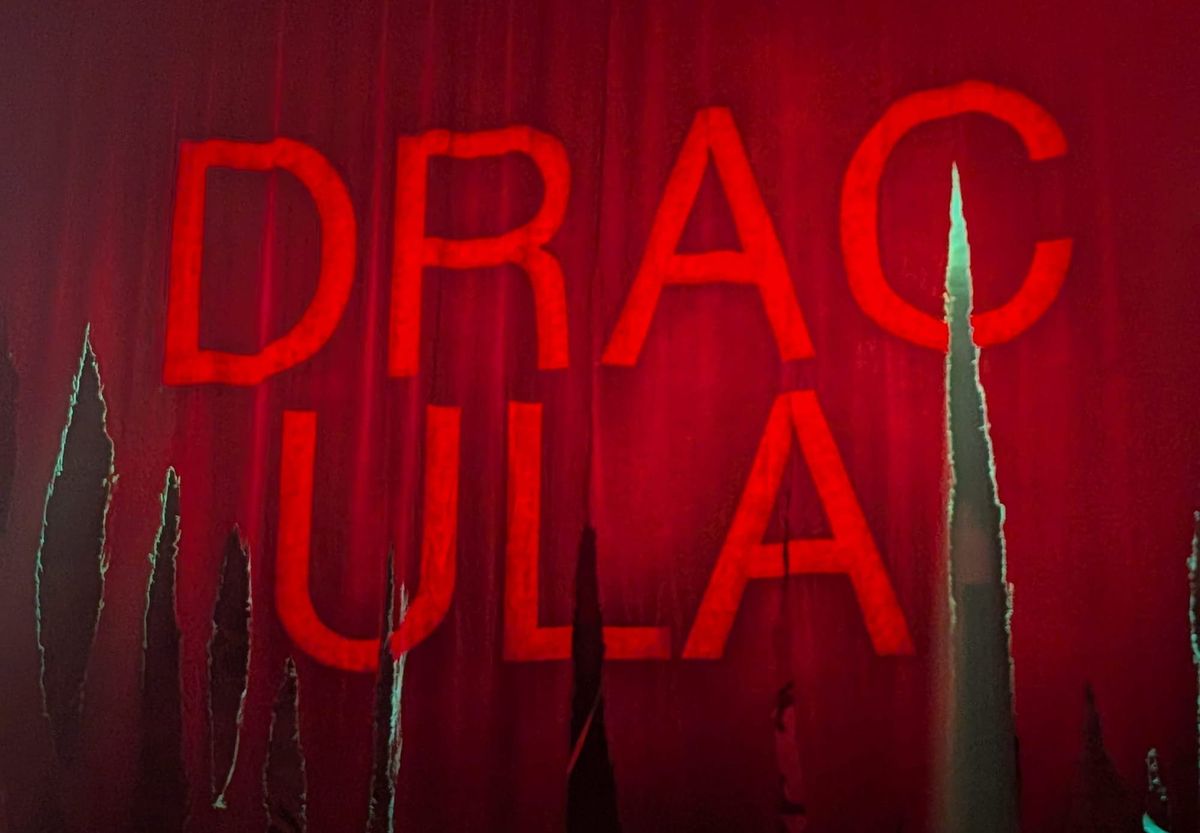
Umi Myers was perfectly cast as robot Helen, or Helli, perhaps the only occasion in her career when she might want to read that her acting was truly robotic. Her eyes were so blue when she burst into life that for a moment we almost thought they were electrified somehow. Umi was also a striking Mina Harker in Dracula last year, review below, and also appeared in Dope Girls, now on BBC iPlayer. Fans of Mos Def will have no trouble finding @umi_says_ on social media and I'm happy to say the female actors stole the show with their fight scenes, gymnastic climbing and much else. The guys weren't bad either.
You can get your tickets here.
 PAUL DETTMANN